
Industry Insider
Artificial Intelligence & Machine Learning Digital Transformation

Johnson & Johnson’s Bold Bet on AI: Redefining the Future of Surgery, Drug Discovery, and Patient Care

In a high-stakes operating room in Chicago, a young surgical resident pauses briefly mid-procedure. On a nearby screen, a three-minute highlight reel plays captured not from a TV drama, but from a real surgery, recorded earlier and processed by Johnson & Johnson’s cutting-edge AI system. The clip reveals a critical maneuver performed flawlessly by a peer. In that instant, AI becomes more than a tool; it becomes a mentor. This is the future of healthcare, and Johnson & Johnson (J&J), a 138-year-old pharmaceutical and MedTech powerhouse, is putting artificial intelligence at the center of its reinvention. From the operating table to molecular labs, and from rural clinics to global supply chains, J&J’s AI-infused strategies are reshaping healthcare with astonishing speed and precision. From Experimentation to Execution: Narrowing the Focus for Maximum Impact For years, J&J has explored over 900 generative AI (gen AI) use cases. But by 2023, the company realized that experimentation alone wouldn’t deliver value. It was time to focus. “We’ve moved from a thousand flowers blooming to a prioritized focus on gen AI,” explained Jim Swanson, Chief Information Officer at J&J. This pivot now guides the company’s multi-pronged AI strategy; targeting six key areas, from drug discovery to supply chain resilience. Underpinning it all is a robust ethical framework rooted in fairness, transparency, and privacy, laid out in J&J’s 2023 AI & Ethics position paper. In a time when public trust in technology can be fragile, this foundation is no afterthought; it’s a business imperative.   The AI Gold Rush in Healthcare: Why the Timing Is Right The healthcare sector is in the throes of a digital gold rush. According to PYMNTS’s AI Monitor Edge Report, 90% of healthcare organizations with over $1 billion in revenue are already seeing positive returns from gen AI. Firms investing $6.4 million or more reported significantly better outcomes compared to those investing under $1.5 million. “Healthcare stands as one of the most promising areas for gen AI-driven innovation,” the report stated. And with 59% of healthcare leaders planning to boost AI budgets in 2025, the momentum is undeniable. Six Strategic AI Frontiers at Johnson & Johnson 1. Smarter, Safer Operating Rooms J&J’s polyphonic ecosystem; a suite of AI tools currently being tested in 10 U.S. hospitals; is changing the surgical game. By analyzing real-time and historical surgical videos, it creates educational highlight reels within minutes. One orthopedic resident in Chicago halved their learning curve for hip replacements using this system. Across the Atlantic, a London hospital uses the same platform to conduct remote surgical coaching via telepresence, connecting senior surgeons with trainees in Africa and Asia. “Surgeons are like elite athletes,” said Shan Jegatheeswaran, J&J’s VP of MedTech Digital. “They review tape to refine every move.” 2. Precision in the Palm of a Surgeon’s Hand In cardiology, J&J’s CARTO-3 System uses deep learning to generate 3D heart maps, streamlining atrial fibrillation ablation procedures and reducing time by 15%. Meanwhile, its Virtu Guide software for orthopedic surgery, which automates surgical planning, is poised to redefine how foot deformities are corrected. In a 2024 trial, a Florida podiatrist saw patient recovery times drop significantly thanks to the system’s precision, aligning bones with 30% greater accuracy than traditional methods. 3. Accelerating Drug Discovery J&J’s AI models mine genetic and clinical data to uncover new disease pathways. In 2024, the system identified a previously overlooked breast cancer mechanism, now a candidate for targeted therapy. A partnership with a Boston-based biotech firm recently used AI to refine a molecule that binds to an elusive rheumatoid arthritis protein, dramatically reducing adverse effects in early trials. “We can now advance the most promising drug candidates faster and smarter,” said Dr. Chris Moy, Scientific Director at J&J. 4. Democratizing Clinical Trials In Alabama’s Black Belt region, long underserved by major health networks, AI is leveling the playing field. In 2024, J&J used real-world data to expand a lung cancer trial into rural areas, enrolling over 200 patients in just three months. AI models identify optimal trial sites in real time, factoring in demographics, disease incidence, and access barriers. The result? More inclusive research, better outcomes. 5. Truly Personalized Medicine AI’s role in diagnostics is fast becoming transformative. J&J has deployed an AI-powered biomarker test for bladder cancer that scans tissue samples for FGFR alterations. In early pilots, treatment doubled. A separate Alzheimer’s study used AI to analyze MRI scans and spotted early signs that had eluded expert radiologists. In one patient’s case, early intervention slowed cognitive decline by six months—a lifetime for those navigating neurodegeneration. 6. A Supply Chain That Thinks Ahead During a hurricane in 2024, J&J’s AI-powered logistics system predicted transportation bottlenecks and rerouted chemotherapy shipments before delays occurred. The AI anticipated regional drug demand spikes and adjusted inventory; preventing potential shortages in critical care wards. The system, trained on weather models, geopolitical events, and historical demand data, is now expanding globally. Case Study: A New York Oncologist and the AI That Changed 20 Lives Dr. Marissa Cheng, an oncologist at a major New York hospital, was among the first to use J&J’s Medical Engagement AI platform. The system flagged 20 of her patients as candidates for revised treatments based on updated guidelines and real-world evidence. “I was skeptical at first,” she admitted. “But the AI caught gaps I hadn’t seen. After adjusting therapies, we saw measurable improvements in tumor markers within months.” The platform is used by over 5,000 providers and has identified 75,000 U.S. patients with unmet needs. It’s not about replacing doctors; it’s about supercharging their insight. From Compliance to Culture: Building AI on Ethical Foundations Technology, especially in medicine, is only as good as the values guiding it. J&J’s AI framework rests on five ethical pillars: fairness, privacy, security, responsibility, and transparency. This isn’t window dressing. J&J conducts annual data audits to check for algorithmic bias. All AI systems use encrypted storage and include opt-in consent protocols. A 2024 internal training initiative reached 10,000 employees, empowering them to use AI responsibly. One

Read More »
Redesigning Healthcare, One Voice Command at a Time: How WellSpan and Microsoft’s Dragon Copilot Are Rewriting the Rules:

Redesigning Healthcare, One Voice Command at a Time: How WellSpan and Microsoft’s Dragon Copilot Are Rewriting the Rules:

The Hidden Crisis Behind the White Coats Walk through the halls of any major hospital, and you’ll find physicians darting between patient rooms, nurses juggling charts and conversations, and the constant hum of medical monitors. But beyond the visible chaos, there’s a quieter, more insidious crisis brewing; administrative overload. At WellSpan Health in Pennsylvania, Dr. R. Hal Baker, a seasoned physician and now the Senior Vice President and Chief Digital and Information Officer, had seen enough. “It wasn’t just the volume of documentation,” Baker reflects, “It was how it distracted from what we trained for the patient interaction.” Each patient encounter means another round of notes, referral letters, after-visit summaries, coding, and compliance tasks. The joy of medicine was being buried under an avalanche of paperwork. Then came a powerful ally; Microsoft’s Dragon Copilot. From Burden to Breakthrough: The Birth of Dragon Copilot Dragon Copilot is not just another software tool thrown at a complex problem. It is a thoughtfully engineered blend of voice recognition, ambient listening, and generative AI. Created through the merger of Nuance’s Dragon Medical One (DMO) technology with Microsoft’s AI firepower, it represents a next-gen leap in digital healthcare. What sets Dragon Copilot apart is its seamless integration into the clinician’s workflow. Whether through a desktop, mobile, or browser interface, the tool operates within the Microsoft Cloud for Healthcare and synchronizes directly with electronic health records (EHRs). It captures conversations, generates documentation, and even drafts referrals; all while ensuring compliance with strict data privacy regulations. Baker calls it “an ecosystem, not just a product.” The mission? Restore the human connection in healthcare by letting clinicians focus on people, not paperwork. A Conversation That Changed Everything Consider the experience of Dr. Meena Kapoor, a family medicine specialist at WellSpan. After an exhausting 10-hour shift, she sat down to complete her documentation; a task that often-extended hours into the night. Now, with Dragon Copilot listening passively during visits and drafting the majority of the notes in real-time, Dr. Kapoor finishes her work before leaving the clinic. “I used to go home feeling drained. Now I leave with mental space to think about my patients, not just my paperwork,” she says. This isn’t an isolated story. Across the 340 organizations surveyed by Microsoft, 70% of clinicians using DAX Copilot; the predecessor to Dragon Copilot; reported lower burnout. More compellingly, 62% said they were less likely to consider leaving the profession. Why Microsoft Bet $16 Billion on Voice When Microsoft acquired Nuance in 2021, it wasn’t merely acquiring software; it was investing in the future of human-machine collaboration in medicine. Nuance’s DMO already had a strong foothold, transcribing billions of patient interactions annually. The next step was to evolve passive transcription into active, intelligent assistance; something Dragon Copilot now delivers with precision. Dragon Copilot’s ambient listening, powered by DAX technology, processed more than 3 million patient conversations last month alone. It’s not just listening; it understands, summarizes, and suggests, making it an always-on assistant for healthcare professionals. The Global Burnout Epidemic and AI’s Response The World Health Organization (2022) described burnout among public health workers as a global crisis. Over one-third report mental and physical strain, much of it tied to documentation overload. While U.S. burnout rates dropped slightly from 48% in 2023 to 45% in 2024, the numbers remain troubling. Joe Petro, Microsoft’s Corporate VP of Health & Life Sciences, emphasizes the potential. “AI isn’t replacing clinicians; it’s restoring them. It’s giving them back the time to care.” That extra five minutes per patient encounter? Multiplied over hundreds of interactions, it translates to hundreds of hours each year; time that could be spent on patient care, research, or simply mental recovery. Case Study: Ottawa’s Early Leap At The Ottawa Hospital, CIO Glen Kearns was one of the first to explore Dragon Copilot. Facing a national shortage of medical professionals, Canada needed scalable tools to ease clinician burden. “This isn’t just about efficiency,” Kearns explains. “It’s about keeping our doctors in the system.” With AI-driven summaries, referrals, and intelligent EHR entries, Kearns sees a future where Dragon Copilot doesn’t just save time; it saves careers. The Rising Tide of Competition Of course, Microsoft is not alone in this race. Abridge, with $460 million in funding, is deployed at Mass General Brigham, turning patient-doctor dialogues into structured EHR notes. Epic, used by Cleveland Clinic, embeds ambient AI natively into its systems for smoother integration. Amazon Health Scribeautomatically generates clinical summaries, while companies like Basalt Health, 3M, and Babylon Health are deploying AI for backend risk analysis and documentation. Google, not to be left behind, is pushing Vertex AI Search, a multimodal platform to search complex clinical data using voice and image inputs. Yet Dragon Copilot’s unique strength lies in its end-to-end integration across devices, cloud services, and workflows; all under Microsoft’s trusted enterprise umbrella. A Cultural Shift, Not Just a Tech Upgrade Despite the hype, AI adoption in healthcare isn’t automatic. It requires trust, training, and change management. WellSpan didn’t just install new software; they redesigned entire workflows. Clinicians were trained not just to use Dragon Copilot but to trust it. The tech had to prove itself to one patient at a time. Dr. Baker is realistic. “We’re not naïve. AI won’t solve every problem. But if it can give us back just 10% of our day, that’s a revolution.” What Comes Next? Set for general availability in the U.S. and Canada by May 2025, and soon after in the UK, France, Germany, and the Netherlands, Dragon Copilot is already proving its global relevance. Microsoft’s extensive partner ecosystem, including software vendors and cloud providers, ensures a scalable path forward. As the world’s healthcare systems strain under rising demand and clinician fatigue, tools like Dragon Copilot could be the scaffolding upon which modern healthcare rebuilds itself. Final Thoughts: Humanity, Rebooted We often speak of technology as cold, impersonal, and complex. But in the case of Dragon Copilot, its greatest gift might be deeply human; time, attention, and emotional presence. One of Dr. Kapoor’s patients, an elderly

Read More »
Engineering the Future How SAP and TCS Are Powering the Autonomous High-Tech Enterprise

Engineering the Future: How SAP and TCS Are Powering the Autonomous High-Tech Enterprise

The Age of Acceleration: Why High-Tech Firms Must Evolve; Now In today’s digital battlefield, high-tech companies are not just racing to innovate; they’re sprinting to survive. The combination of hypergrowth, shifting monetization models, and geopolitical turbulence has created an inflection point. To thrive, firms must transition from traditional operational paradigms to something far more agile: autonomous enterprise. At the heart of this shift lies a powerful alliance; SAP and Tata Consultancy Services (TCS). Together, they’re reshaping how high-tech firms tackle complexity, scale intelligently, and future-proof their businesses. From Scale-Ups to Stalwarts: One Size Doesn’t Fit All Whether you’re a venture-backed startup or a legacy semiconductor giant, the growth journey in high tech is fraught with unique challenges. Startups need speed, simplicity, and scalability; incumbents require resilience, integration, and continuity. Mark Lehew, SAP’s VP of Industry Executive Advisory for North America, captures the dichotomy: “Scale-ups tend to be growing rapidly, with limited resources and limited time. It’s about getting a foundational solution in place fast; with as few resources as possible.” To address this, SAP has architected two distinct paths to cloud transformation: GROW with SAP: Tailored for fast-moving firms, GROW uses preconfigured templates with embedded industry best practices. Companies can go live in as little as 3–4 months; a game-changer for speed-to-value. RISE with SAP: Designed for established players with complex on-premises setups, RISE tackles the thorny issues of cloud migration—custom code, legacy integration, and architectural overhaul—while offering greater control and flexibility. Together, GROW and RISE empower firms at any stage of growth to build a robust, scalable foundation. Case Study: Digital Reinvention on a Deadline A North American digital print services company offers a compelling example. With operations sprawling across North America and Asia, they faced a fragmented tech landscape that stifled efficiency. By adopting SAP’s high-tech template and TCS Crystallus™, they transitioned to a single cloud-based platform in under five months. What stood out wasn’t just the speed; it was the clarity. Using preconfigured scenarios from Crystallus, the leadership team visualized their future state before implementation even began. “It de-risked the entire process,” said the firm’s CTO. “We saw the transformation before we lived it.” Cloud as the New Core: The Engine of the Autonomous Enterprise At the core of SAP’s modern platform strategy lie three critical components: Proven Business Applications: Decades of high-tech best practices baked into enterprise-grade software. Embedded AI & Intelligent Agents: Beyond simple automation, these systems drive real-time decision-making across functions. The Business Data Cloud: A unified semantic layer blending SAP and third-party data sources; fueling analytics, GenAI, and strategic insights. This trifecta isn’t theoretical. It’s already enabling companies to move from reactive to predictive business models, anticipating disruptions before they hit. The Human Edge: Why TCS Is Critical to SAP’s Global Vision Technology alone doesn’t deliver transformation; people do. And that’s where TCS comes in. “TCS brings deep industry knowledge, implementation speed, and global muscle,” explains Lehew. “With 3,100 high-tech customers worldwide, we simply can’t scale without them.” TCS’s value extends beyond deployment. With its suite of accelerators, change management capabilities, and co-innovation initiatives, it acts as a transformation of co-pilot. Nowhere is this more evident than in TCS Crystallus™, a layered blueprint for business reinvention. Anatomy of TCS Crystallus™: A Blueprint for Perpetual Innovation Prashant Shirgur, Global Head of Enterprise Solutions at TCS, describes Crystallus as “a journey from imagination to execution.” It’s built on three layers: Digital Core: SAP S/4HANA provides a clean, modular ERP foundation. Composable ERP: Modular, cloud-native extensions on SAP BTP that allow companies to evolve without breaking the core. Industry-Specific Innovation: Integrating GenAI, analytics, and emerging tech to create differentiators at the edge. This architectural discipline enables “clean-core” operations; a principle that prevents ERP sprawl and supports continuous upgrades and innovation. Real-World Example: Reinventing Semiconductor Supply Chains At SAP Sapphire Barcelona, TCS shared the story of a leading semiconductor manufacturer grappling with global supply disruptions, regulatory shifts, and multi-tier supplier dependencies. Using Crystallus and SAP’s business suite, they restructured their procurement, manufacturing, and forecasting systems. Not only did this cut lead times by 22%, but it also allowed for more resilient planning; critical in an industry where a missing chip can derail millions in revenue. The XaaS Economy: New Models, New Architectures High-tech firms are also shifting to subscription-based, outcome-driven models; Everything-as-a-Service (XaaS). But this isn’t just a pricing change; it’s a fundamental rethinking architecture, customer relationships, and monetization. “Customers demand flexibility and personalization,” notes Prashant. “This requires agile backend systems that can handle microservices, usage-based billing, and real-time customization.” SAP’s cloud suite and TCS’s modular design patterns are purpose-built to support this transition; without the technical debt of legacy systems. From Automation to Autonomy: The GenAI Revolution What is next? The Autonomous Enterprise. TCS envisions a future where AI agents handle routine decisions, flag exceptions, and orchestrate workflows; freeing humans to focus on strategy and innovation. But autonomy is a journey. Early implementations involve GenAI analyzing operational bottlenecks or crafting dynamic financial forecasts. In mature cases, agentic AI may initiate restocking, trigger maintenance, or renegotiate supplier contracts; all without human intervention. This isn’t hypothetical. In pilot programs, TCS clients have reduced manual processing times by over 40% by embedding GenAI in core operations. Pace Ports™: Where Innovation Gets Real To foster this evolution, TCS has built Pace Ports™; collaborative innovation hubs located in New York, Amsterdam, Tokyo, and beyond. These aren’t ivory towers; they’re immersive playgrounds where enterprise leaders, startups, and domain experts prototype ideas, test assumptions, and rapidly validate impact. From blockchain traceability for electronics to AI-powered quality control in manufacturing, Pace Ports are where concepts become capabilities. Final Word: Perpetual Transformation Is the New Normal In an era of relentless disruption, success isn’t about reaching a static destination; it’s about developing the muscle to continuously evolve. TCS and SAP aren’t just implementing ERP upgrades; they’re engineering a new class of enterprise: intelligent, autonomous, and resilient. Whether you’re a fast-scaling SaaS firm or a 50-year-old chipmaker, the path forward lies in a clean core,

Read More »
Rethinking SaaS The Strategic Shift Toward Agentic Software Models

Rethinking SaaS: The Strategic Shift Toward Agentic Software Models

By Team Technology Columnist Introduction: The Quiet Disruption That’s Redefining Software Something monumental is unfolding in the software world quietly, but unmistakably. What began as a buzz around artificial intelligence is now coalescing into a profound shift that challenges the very foundations of how software is designed, deployed, and delivered. The disruption is not coming from flashy new features or faster releases but from autonomous AI agents that promise to reshape the traditional Software-as-a-Service (SaaS) model into something far more dynamic: Service-as-Software. Earlier this year, Microsoft CEO Satya Nadella, during his visit to India, gave voice to this growing undercurrent. He predicted that AI agents intelligent, task-executing systems would upend SaaS as we know it. Rather than relying on static workflows and pre-defined user interfaces, business logic will increasingly migrate into an orchestrated layer of AI agents, capable of interpreting intent and delivering outcomes with minimal human intervention. The message is clear: Software is no longer just a tool. It is becoming a team. Understanding AI Agents: From Tools to Autonomous Colleagues AI agents are not your average automation scripts. They are systems built to reason, decide, and act independently. Think of them as digital colleagues capable of learning from context, optimizing workflows in real time, and interacting across software ecosystems without waiting for human prompts or code pushes. These agents blend deterministic logic (rules and algorithms defined by humans) with probabilistic intelligence (models that adapt, infer, and evolve). The result? Systems that are both consistent when needed and flexible when the situation demands it. “Agentic AI is changing how software functions are executed, not just how it’s written,” said Kalyan Kumar, Chief Product Officer at HCL Software. “We’re moving away from static code deployments toward dynamic orchestration.” A striking example lies in cybersecurity. Traditionally, software updates and security patches were released periodically. But AI agents can now detect vulnerabilities in real time and deploy fixes instantly—no release cycle required. The result is not just faster problem-solving, but proactive, preventative maintenance driven by intelligent systems. Developers as Orchestrators: A New Era of Software Craft The traditional software development life cycle code, test, deploy, repeat is starting to feel archaic. According to Salesforce’s State of IT report, 92% of Indian development leaders believe AI agents will soon be as fundamental as compilers or code libraries. This shift means that tomorrow’s developers won’t just be programmers. They’ll be orchestrators designing networks of intelligent agents that collaborate to deliver business outcomes. They’ll spend less time on syntax and more on strategy: aligning systems to goals, outcomes, and metrics. “AI agents aren’t just another utility they represent a seismic shift,” said Arun Kumar Parameswaran, EVP at Salesforce. “The developer’s role is evolving from coder to systems architect, from tool builder to experience designer.” This isn’t just about technical capacity. The low-code/no-code movement gives more professionals access to the levers of software creation, allowing domain experts not just engineers to design intelligent workflows. AI is democratizing development, opening the door for collaborative innovation at an unprecedented scale. SaaS Isn’t Dying It’s Becoming Invisible Some industry commentators have framed this evolution as the death knell for SaaS. But in truth, it’s more of a metamorphosis. “SaaS isn’t disappearing, it’s dissolving into a more intelligent form,” says Janakiram MSV, principal analyst at Janakiram & Associates. “The future isn’t about offering software as a product it’s about delivering services as outcomes, powered by autonomous systems.” Where today’s SaaS provides tools (think of CRM platforms or HR systems), tomorrow’s service-as-software will deliver complete solutions. For instance, instead of using tax software to manually input figures and calculate returns, future AI agents could autonomously ingest financial data, file taxes, and only alert humans when edge cases arise. This isn’t a pie-in-the-sky vision. It’s already emerging across industries: In healthcare, AI agents can now help doctors with triage cases, synthesize diagnoses, and even draft treatment plans based on patient history and the latest clinical research. In logistics, agents can coordinate complex supply chains in real time, responding to delays, rerouting shipments, and maintaining SLAs autonomously. In customer support, multi-agent systems manage end-to-end case resolution across email, chat, CRM, and billing systems without the need for multiple human touchpoints. The Core Shift: From Interfaces to Outcomes Janakiram outlines three fundamental shifts that define the transition to agent-driven service models: From user interfaces to intent-driven interfaces Users no longer need to click through multiple menus. They describe what they want—and agents determine how to achieve it. From feature releases to capability evolution Software doesn’t wait for monthly updates. It evolves continuously, adapting its capabilities based on real-time performance and user feedback. From tool delivery to outcome guarantees Companies won’t just sell access to software they promise results. Imagine CRM systems that don’t just store leads, but ensure your quarterly conversion targets are met, autonomously. “This isn’t about adding AI to existing tools. It’s about reimagining how services are delivered,” Janakiram emphasizes. How SaaS Companies Can Prepare for the Agentic Era To stay competitive in this evolving ecosystem, SaaS providers must fundamentally rethink their approach. It’s no longer enough to bolt on a chatbot or sprinkle in some machine learning. Instead, leaders should focus on: Outcome-First Design Begin with the result the user wants—not the features you want to build. API-Ready Infrastructure Agents thrive on interoperability. Ensure your software can talk to other systems seamlessly. Continuous Learning Models Implement feedback loops that allow systems to improve over time. Balanced Autonomy Design hybrid systems that let humans intervene when needed but otherwise run autonomously. Service-Level Guarantees for Autonomy Define and track SLAs for AI-driven outcomes. Measure uptime not just in terms of availability, but in terms of results delivered. Final Thought: The Future Is Already Being Written We stand at a technological inflection point. Just as cloud computing revolutionized infrastructure and SaaS redefined distribution, agentic AI is poised to remake the essence of software itself. This new paradigm where intelligent agents act, learn, and deliver autonomously will reshape industries and redefine professional roles. It will demand new thinking from

Read More »
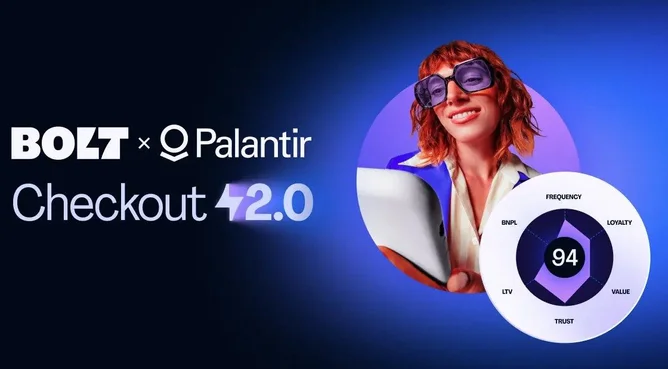
AI at the Checkout: How Bolt and Palantir Are Rewriting the Rules of Online Retail

AI at the Checkout: How Bolt and Palantir Are Rewriting the Rules of Online Retail

By Team, Technology & Retail Columnist The Future of Shopping Is Being Written at Checkout For years, the online checkout experience has remained surprisingly stagnant; a necessary but often clunky final step in e-commerce. No matter how sleek a store’s homepage or how personalized the product recommendations are, when it came time to pay, shoppers were usually greeted with the same static form: name, card number, billing address, and a hope that they wouldn’t abandon their cart. Bolt Financial and Palantir Technologies are aiming to change that with a bold new collaboration they’re calling Checkout 2.0; an AI-powered, real-time adaptive checkout system that promises to personalize and streamline online shopping like never before. Their goal? Nothing short of reinventing how people buy online. A Partnership Forged in Data and Intelligence On the surface, the partnership may seem unlikely. Bolt is a fast-moving fintech startup best known for its frictionless one-click checkout experiences. Palantir, on the other hand, is known for its deep roots in defense and big data analytics; with a reputation for handling some of the world’s most complex decision-making problems. But behind the scenes, the two companies bring complementary superpowers to the table. Bolt brings access to a sprawling database of over 80 million online shoppers through its Universal Shopper Network, built from nearly a decade of retail partnerships. Palantir supplies the analytical firepower: advanced AI decision engines capable of interpreting patterns in user behavior and turning those into real-time responses. “It’s like giving online checkout a brain and a memory,” says Ted Mabrey, Global Head of Commercial at Palantir. “No more static pages. Every transaction becomes smarter than the last.” From One-Size-Fits-All to Just-For-You Imagine a cosmetics enthusiast who shops frequently on her phone, usually late at night, and prefers Apple Pay. Instead of forcing her through a generic checkout funnel, Checkout 2.0 might greet her with suggested add-ons from her favorite brands, a payment option she’s used before, and a simplified mobile interface. Another shopper, perhaps a crypto enthusiast buying gaming hardware, might see an entirely different flow; one that integrates Bolt’s native crypto wallet. This is personalization not just as a marketing gimmick, but as a core transactional experience. Ryan Breslow, Bolt’s Founder & CEO, likens it to “Netflix-style personalization at the checkout stage; except instead of recommending movies, we’re anticipating behavior and payment preferences to drive completion.” Real-World Results: Two Case Studies Beauty Retailer Breakthrough: Take Kendra Scott, one of Bolt’s early retail partners. Before Checkout 2.0, the jewelry brand suffered a familiar issue; high cart abandonment, especially on mobile. After piloting the personalized checkout, they saw a 17% increase in mobile conversion within the first two weeks. Shoppers were more likely to follow through, thanks to simplified payment options and real-time upselling that felt relevant rather than intrusive. Crypto Confidence at Checkout: Another example comes from a mid-sized electronics retailer that embraced Checkout 2.0’s crypto capabilities. By offering Ethereum and Bitcoin as payment methods, the brand tapped into a niche but loyal demographic of tech-savvy customers. One shopper reportedly messaged support saying, “This is the first time I felt like I could use crypto without jumping through hoops.” The underlying engine, powered by Palantir’s Foundry platform, constantly learns from these micro-interactions; refining the process and making each subsequent checkout smoother and more context aware. Inside the Architecture: How Checkout 2.0 Works Technically, Checkout 2.0 is built on a dynamic decision-making process. Each shopper has a persistent profile that gets updated with every completed (or abandoned) transaction. Palantir’s AI interprets these profiles to recommend not just products but optimal payment methods, shipping choices, and even the sequence of form fields. The system also detects when a customer is likely to churn; for example, if they pause too long at the payment page; and can trigger targeted incentives like limited-time discounts or simplified guest checkout options. Crucially, privacy has been baked into the design. “All shopper insights are anonymized and governed in compliance with modern data protection standards,” Bolt emphasized. Scaling Up: The Road Ahead Bolt plans to scale Checkout 2.0 across its enterprise partners using Palantir’s infrastructure, unlocking a potentially massive network of retailers who otherwise couldn’t afford to build such sophisticated checkout systems themselves. “We’re democratizing Amazon-level experiences,” says Breslow. “But without forcing merchants into Amazon’s ecosystem.” And it’s not just about sales conversion. For retailers, Checkout 2.0 provides analytics dashboards, operational insights, and fraud detection tools — turning the checkout from a black box into a rich source of strategic intelligence. Checkout as a Competitive Advantage In a retail landscape where every second counts, and every abandoned cart stings, companies are racing to find an edge. Bolt and Palantir are betting that the final step of the online shopping journey, the checkout, is where that edge lies. But more than that, they’re redefining what it means to understand your customers. The result? A checkout experience that feels less like a form to fill out, and more like the end of a great conversation. Final Thoughts The rise of Checkout 2.0 signals a broader shift in digital commerce: personalization is no longer a front-end flourish; it’s becoming a backend necessity. As AI continues to infiltrate every corner of the customer’s journey, checkout, the once-overlooked frontier, is now one of the most strategic battlefields. Whether you’re a global brand or a growing boutique, the message is clear: adapt, personalize, and move fast; or get left behind at the checkout.

Read More »
Can Octopus Energy and Enfuce Crack the EV Fleet Code?

Can Octopus Energy and Enfuce Crack the EV Fleet Code?

The EV Bottleneck No One Talks About Ask any fleet manager trying to electrify their vehicle operations, and you’ll hear a familiar sight: “It’s not just about charging stations; it’s about everything that happens in between.” Despite aggressive EV targets, mounting climate deadlines, and public policy tailwinds, the day-to-day reality of operating electric fleets remains tangled in technical complexity. From juggling different charging apps to handling inconsistent invoicing across vendors and countries, the so-called EV revolution has left many corporate procurement teams in a holding pattern. But a recent partnership between Octopus Energy, one of Europe’s fastest-rising energy tech firms, and Finnish fintech disruptor Enfuce, might just tip the scales. Together, they’re launching the Electrovores Business Payments Card, a sleek piece of plastic backed by a sophisticated, unified payments infrastructure designed to streamline EV fleet operations across the continent. At its heart, this isn’t just a new card. It’s a bold attempt to eliminate one of the final friction points stalling EV uptake at scale. Why Payment Infrastructure Is the Hidden Roadblock To the casual observer, it may seem that the EV industry’s biggest hurdles are range, battery technology, or even the availability of public chargers. But for corporate fleets, especially those operating across borders, payment fragmentation is a silent killer of momentum. The issue stems from the chaotic tangle of charging providers, each with their own apps, RFID systems, pricing schemes, and billing formats. Companies operating fleets in multiple countries often find themselves buried under a mound of incompatible invoices and financial reconciliation nightmares. “It was like trying to run a modern business with 1990s telecom infrastructure,” recalls Sophie Keller, Head of Fleet Strategy at a UK-based logistics firm that tried going electric in 2022. “We spent more time managing billing errors than charging vehicles.” Octopus + Enfuce: An Elegant Fusion of Energy and Fintech Enter Octopus Energy and Enfuce. Unveiled at Money 20/20 Europe, the Electroverse Business Payments Card brings together Enfuce’s certified Visa Fleet 2.0 processing platform with Octopus’s Electroverse EV charging network; a sweeping digital map that already connects over 960,000 charging points across 40 countries. The core breakthrough? Centralized transaction management. With a single card, fleet managers can now handle charging costs, operational expenses, and fuel purchases across the continent; no matter the charging provider; through one unified backend. It’s a game-changer that Denise Johansson, Co-Founder & Co-CEO of Enfuce, believes is crucial to fleet electrification: “As EV adoption scales, the infrastructure beneath it has to move just as fast. Our technical partnership with Octopus is about creating that invisible layer of intelligence; one that allows businesses to focus on driving, not decoding bills.” One Card to Charge Them All Technically, the card is powered by real-time APIs, automated spend controls, and machine learning-based fraud detection. More than that, it plugs directly into corporate finance systems, enabling granular control over who charges what, where, and for how much. “It’s about empowering the finance team just as much as the fleet team,” says Matt Davies, Director of Electroverse at Octopus. “Simplifying the driver’s experience is only half the battle; simplifying reporting, compliance, and budget management is what makes electrification viable at scale.” This idea isn’t just theoretical. A pilot conducted with a large European retail chain saw a 40% reduction in administrative time managing EV charging expenses after switching to the card. “It allowed us to refocus on strategy instead of chasing receipts,” said their CFO under condition of anonymity due to internal policy. A Real-Life Test Case: Nordic Logistics, Simplified Lumo Logistics, a Finnish mid-size delivery operator, had been hesitant to transition its 80-vehicle fleet to EVs. The problem wasn’t enthusiasm or environmental targets; it was the lack of financial tools to manage dispersed charging. After enrolling in the Enfuce-Octopus pilot, the company reported: A 70% drop in missed expense claims Seamless integration with existing SAP finance systems Greater driver compliance due to simplified processes “We didn’t need to retrain anyone,” said Kari Tuominen, Lumo’s COO. “The system felt native. It’s like contactless payments went B2B overnight.” Beyond Charging: A Roadmap for Future Mobility The Electroverse card is just the starting point. Both companies are working on next-gen features, including: Telematics integrationfor dynamic charging suggestions based on vehicle data CO₂ tracking toolsfor sustainability reporting Real-time fleet optimization dashboards In the words of Monika Liikamaa, Co-Founder & Co-CEO of Enfuce: “We’re not just solving payments; we’re building the digital nervous system for sustainable transportation.” There are also hints that the partnership may evolve to support micro-mobility solutions, including e-bikes and scooters, expanding the definition of fleet itself. The Bigger Picture: Is This the Tipping Point? With Europe staring down aggressive emissions targets and many corporates under pressure to prove ESG performance, Octopus and Enfuce may be offering more than a technological fix; they could be delivering a strategic enabler. The broader industry is watching. Payment infrastructure might not sound sexy, but it’s foundational. Like fiber optics to the internet or rails to high-speed trains, this invisible scaffolding can unlock exponential growth when done right. And in a space where every percent of operational efficiency matters, the companies bold enough to invest early in frictionless infrastructure will likely outpace those still stuck in spreadsheet limbo. Final Thoughts: Simplicity Is Power What makes this partnership compelling isn’t the technology alone; it’s the philosophy of reduction. By cutting through the complexity that paralyzes adoption, Octopus and Enfuce are offering something rare in enterprise innovation: clarity. In an era defined by technological noise and digital sprawl, clarity is currency. And for fleet operators navigating the EV transition, it might just be the fuel that powers them forward.

Read More »